
The safest weight loss procedure is the one that produces real results with the least done to your body. By that standard, the incisionless options have reset the whole conversation. Endoscopic Sleeve Gastroplasty reshapes the stomach through the mouth, with no cuts and no hospital stay, and most patients are back to light activity within two days.
Before that becomes the obvious answer, though, it helps to define what “safe” actually measures. Safety in weight loss surgery comes down to a handful of measurable factors, and once you understand them, the options sort themselves out fairly quickly.
What “Safest” Actually Means in Weight Loss Surgery
When patients ask which procedure is safest, they’re usually thinking about more than one thing at once.
A few factors matter most: how invasive the procedure is, how long recovery takes, the rate of complications, whether the change to your body can be reversed, and how well the procedure matches your individual health. A technique with a low complication rate in a healthy 35-year-old may carry more risk for someone managing other medical conditions.

Invasiveness is often the first thing people picture. Procedures that require incisions, general anesthesia, and a hospital stay sit at one end of the spectrum. Procedures done without any incision sit at the other.
Recovery time tends to track closely with invasiveness, which is why the least-invasive options also tend to be the ones you bounce back from fastest.
The full range of weight loss procedures spans both ends, which lets the team match a patient to the safest fit rather than the only option on offer.
How the Main Procedures Compare on Safety
Two surgical procedures have the longest track record and the most data behind them.
Sleeve gastrectomy removes a large portion of the stomach, leaving a slim, banana-shaped section that holds far less food and produces less of the hunger hormone ghrelin.
Gastric bypassreroutes the digestive tract so the body takes in fewer calories.
Both are highly effective, both are performed using minimally invasive laparoscopic technique, and both have decades of outcomes data showing strong, durable weight loss.
They are also still surgery. They involve incisions, general anesthesia, a hospital stay, and a recovery period measured in weeks. For many patients with severe obesity or significant health conditions, that trade-off is well worth it, and these procedures remain the right call. None of this makes them unsafe. The safest choice simply depends on where a patient falls on the spectrum of need.
That spectrum is exactly why endoscopic options have grown so quickly. They give patients who want meaningful results, but not major surgery, a genuine middle ground.
What is Endoscopic Sleeve Gastroplasty?
Endoscopic Sleeve Gastroplasty, or ESG, reshapes the stomach without a single incision.
While you’re under anesthesia, the surgeon passes a flexible endoscope with a suturing device through your mouth and into the stomach, then places internal sutures using the OverStitch Endoscopic Suturing System to fold the stomach into a smaller tube. Volume drops by roughly 70 to 80 percent, so you feel full sooner and eat less. Many patients lose 15 to 20 percent of their body weight when they pair the procedure with nutrition and lifestyle changes.
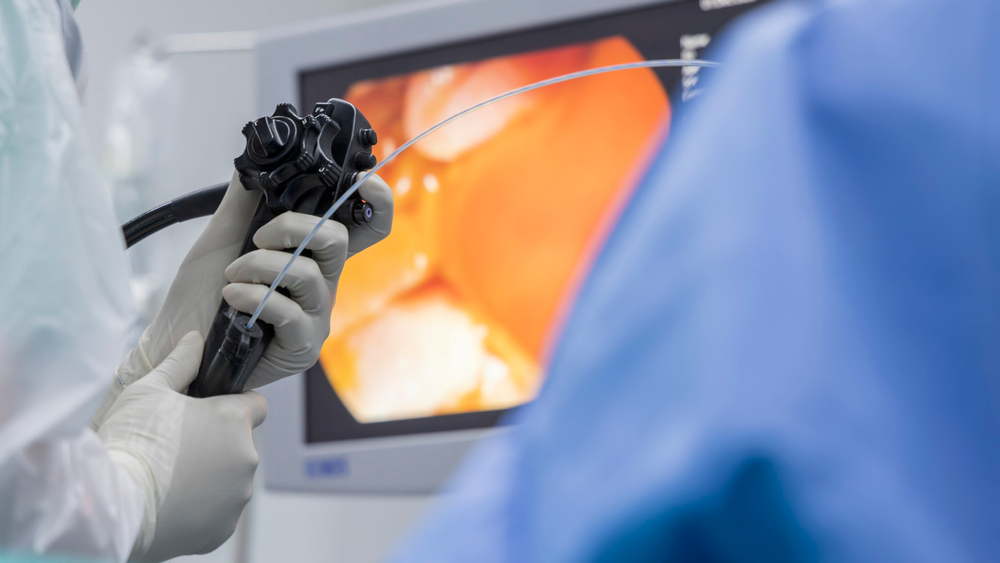
On nearly every safety variable, ESG scores well. There are no external incisions, which removes a whole category of wound and infection risk. Most patients go home the same day and return to light activity within 24 to 48 hours rather than weeks.
Because ESG folds the stomach instead of removing part of it, the natural anatomy is preserved, which makes the procedure reversible. That reversibility offers a kind of reassurance that a more permanent operation can’t.
ESG isn’t right for everyone, and being honest about that is part of doing it safely. It’s intended for adults with a BMI between 30 and 50 who haven’t been able to lose weight through diet and exercise. People who are pregnant, who can’t undergo an upper endoscopy, who take certain blood-thinning medications, or who have a large hiatal hernia or an eating disorder are not candidates.
Why the Surgeon Matters as Much as the Procedure
The safety of any procedure is inseparable from the experience of the person performing it, and that holds especially true for a technically demanding, suture-based endoscopic procedure like ESG.

In Arizona, Dr. Shawn Stevenson is one of only two surgeons trained and FDA certified to perform ESG. His certification covers the entire procedure rather than the technique alone, including clinical evidence, patient selection, follow-up care, and the prevention and management of adverse events. He is also the only surgeon in the Phoenix area who provides a single point of care for it, which means patients don’t have to coordinate between a separate gastroenterologist and a surgical team.
This makes Agave Surgical one of the few practices in Arizona where this advanced endoscopic procedure is even available.
FDA certification for ESG is genuinely limited, and the number of surgeons qualified to perform it in Arizona stays small for a reason. For a procedure where outcomes depend heavily on technique and judgment, that level of specialized training is a meaningful part of what makes it safe.
Finding the Safest Option for Your Body
The safest weight loss procedure is the one matched correctly to your health, your goals, and your candidacy.
For some patients, that’s the proven durability of sleeve gastrectomy or gastric bypass. For others, especially those who want results without incisions or a long recovery, it’s ESG or another less-invasive option.
The only way to know which one fits is an evaluation that weighs your BMI, your medical history, and what you want to accomplish.
Ready to find out which weight loss procedure is the safest fit for you? Schedule an appointment at Agave Surgical, a Dignity Health Medical Group practice, in Phoenix, AZ.