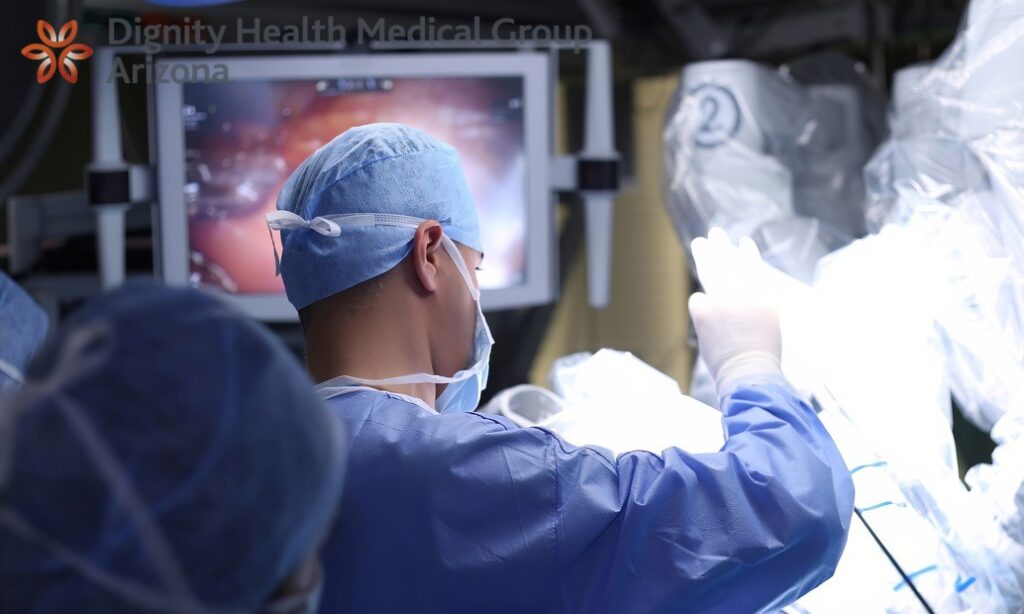
When a surgeon tells you an operation can be done robotically, the technology is rarely what you end up worrying about. Recovery is. How much will it hurt? How many nights will you spend in the hospital? When can you drive, go back to work, or carry a bag of groceries?
At Dignity Health Medical Group, surgeons use the da Vinci system for many abdominal and weight loss procedures, and recovery is where most patients notice the difference. Keep reading to learn more about how da Vinci robotic surgery is changing patient recovery.
Why Smaller Incisions Change How Your Body Heals

Open surgery requires an incision large enough for the surgeon’s hands, often through several layers of abdominal muscle. That muscle has to knit back together, which is a big reason open recovery can stretch over many weeks and why coughing, laughing, or sitting up hurts for a while afterward. Robotic surgery works through a handful of small incisions, each usually less than an inch long. Less cutting means less tissue to heal, a lower chance of wound infection, and smaller scars.
The instruments make a difference too. The da Vinci robotic instruments have small wrists that bend and rotate further than a human wrist can, and the camera gives the surgeon a magnified, high-definition 3D view. That combination lets your surgeon handle tissue gently, place stitches precisely, and work in tight spaces such as the upper abdomen near the diaphragm. Gentler handling inside the body generally means less inflammation and less pain once you wake up.
What the First Few Days of Recovery Look Like

Most patients are up and walking within hours of a robotic procedure, and the care team encourages it. Walking early lowers the risk of blood clots, helps your bowels start working again, and eases the bloating and shoulder ache caused by the gas used to inflate the abdomen during surgery.
Because the incisions are small, pain is usually manageable with non-opioid medications, and many patients need little or no opioid pain medicine after the first day or two. How long you stay depends on the operation. Some procedures allow you to go home the same day, while bariatric surgery typically involves a short overnight stay so the team can monitor fluids and pain.
How Recovery Differs by Procedure
The general pattern holds across procedures, but each operation has its own timeline and its own rules.
Robotic Weight Loss Surgery
Robotic gastric bypass and sleeve gastrectomy are both performed through several small incisions, and many patients return to desk work within two to four weeks.
The incisions are only part of the picture, though. The stomach itself has been reshaped and needs time to heal, so you’ll move through a staged diet of clear liquids, protein shakes, pureed foods, and soft foods over several weeks before returning to regular textures. Sipping fluids steadily and meeting your daily protein goal take real effort during this stretch, and both have a direct effect on your energy and healing.
Hernia and Acid Reflux Repair
Robotic hernia repair lets the surgeon place and secure mesh from inside the abdomen with fine control. That precision is especially useful for large or recurrent hernias and for ventral hernias, which push through the front of the abdomen. Most people go home the same day or the next morning and resume light activity within about a week. Heavy lifting usually waits several weeks while the repair strengthens.
Many people with chronic acid reflux also have a hiatal hernia, where part of the stomach pushes up through the diaphragm into the chest. Robotic surgery lets the surgeon work high in the abdomen, close that opening, and reinforce the valve at the lower end of the esophagus. Swallowing can feel tight for a few weeks while swelling settles, so patients follow a soft diet before gradually returning to normal foods.
Gallbladder Removal
Robotic gallbladder removal is one of the quicker recoveries in general surgery. Most patients go home the same day and return to normal daily activity in about a week, with digestion settling over the following weeks as the body adjusts to bile flowing directly from the liver.
Are You a Good Candidate for Robotic Surgery?

Robotic surgery isn’t the right choice for every patient or every operation. The board-certified surgeons at Dignity Health Medical Group weigh the type and complexity of your condition, any prior abdominal surgeries and scar tissue, and your overall health before recommending an approach. Sometimes a laparoscopic or open operation is the safer path, and an honest recommendation says so.
Going into your consultation with specific questions can also ease anxiety before surgery, because you’ll know what the first days and weeks should look like. These questions are a good place to start.
- Will my procedure be done robotically, laparoscopically, or open, and why?
- How many nights should I expect to stay in the hospital?
- When can I drive, return to work, and lift normally again?
- What diet or activity restrictions will I follow, and for how long?
Ready to find out whether da Vinci robotic surgery could shorten your path to recovery? Schedule an appointment at Dignity Health Medical Group in Phoenix, AZ, today.